What Would Kubrick Think of AI?
I recently rewatched 2001: A Space Odyssey, and I wondered what someone like Stanley Kubrick would think of AI, specifically the generative AI used to create imagery either as a thought starter or a final product, or text that can become a script. One visual effect in 2001 - that of a floating pen in a space shuttle - took months to conceive and produce in a way that looked realistic. Through ingenuity and good, old-fashioned trial and error, Kubrick came up with the solution: double sided tape and plexiglass. For the nebulas and other galactic phenomena we see in the“stargate” sequence near the end, he turned an abandoned factory into a chemical lab and filmed large vats of paint thinner reacting to drops of paint falling in. The chemicals were noxious and the hot studio lights caused bacteria to grow in the vats. Special effects aside, Kubrick was notorious for demanding what many considered to be an excessive amount of takes from his performers; asking them to do something as simple as opening a door dozens and dozens of times until he was satisfied. The creative process can be painful, but all of that sounds particularly punishing. If there were a tool that could create those visuals by simply pushing a button and thereby avoiding the frustration of trial and error, and the physical discomfort of chemical cinematography, do you think Kubrick would have used it? His reputation as a control freak/perfectionist leads me to believe that he would not.
I do not think that would be the only reason though. Among all the dilemmas about generative AI - authorship questions, job loss, energy consumption - I think what is not talked about enough is process loss. Near instant generation of art means there is less, or no, process to the creation. That time spent between art and artist from beginning to final piece is not a step by step operation. It’s a feedback loop where the art and the artist communicate with each other; surprise each other. Rarely do artists begin with a finished idea and just execute it. They start, and in the doing, calibrate their direction based on what they discover, or what challenges arise. So many opportunities for experimentation, improvement, or collaboration can emerge in this space. They can appear in any brushstroke or stroke of the keyboard, or even in mistakes. For example, Kubrick didn’t arrive at the now iconic black monolith until after trying out several different designs. The early ones didn’t work well with the lights, or just didn’t feel right. The feedback in the process led to what we see today. He also was not sure how to portray extra terrestrial life - even when they were deep into production. Eventually, they went too far over budget and couldn’t afford what would have been costly costumes or models. Instead, after inviting input from Arthur C. Clarke and Carl Sagan, he came up with a much more efficient path: you just don’t see them at all.
With gen AI, he would have gotten his first design - a transparent cube - “perfect” and without any light reflection problems because it would be fully computer generated. Alien designs could have been conceived and created more affordably. I’m sure it would have been nice to have all those challenges smoothed out, but would Kubrick have been satisfied with what was generated? Artists with less time and money on their hands - or less demanding creators - might think it’s good enough and just move on to the next thing. As for Stanley, well…
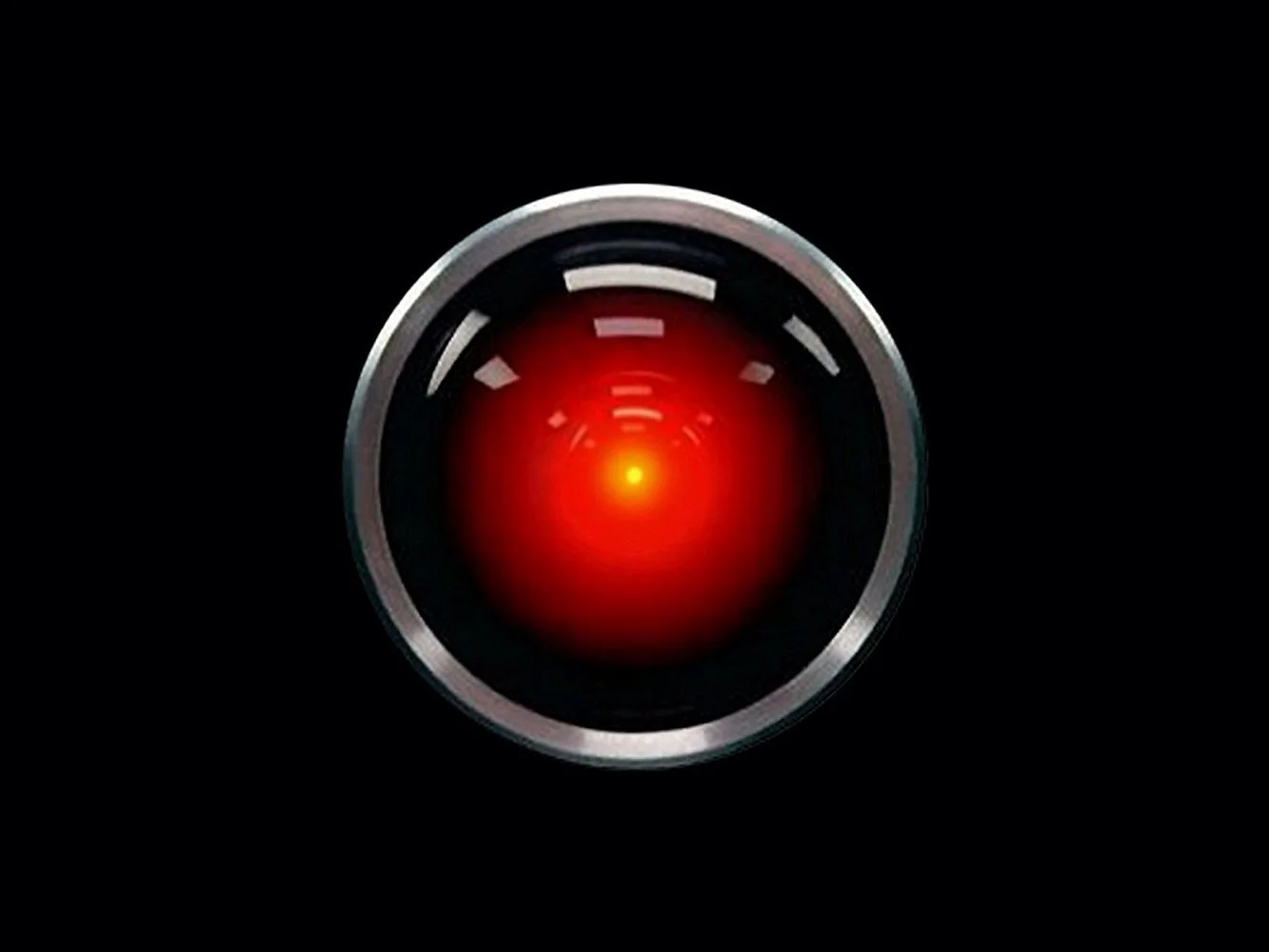
He made AI one of the most iconic villains in movie history. He also destroyed all the models, sets, and design notes from the movie so they would never be used in low budget films. I think it’s safe to say that he would be against using it, or allowing it to use his work.
I’m hardly the first to have philosophical hangups over something like this. This year, photography turns 200. Painters reacted to its invention in 1826 with disdain. The machine was considered a threat to their livelihood and lacked artistry. As we have seen, photography eventually became its own medium. Artists adopted it as merely another tool, while painters pushed their medium into new, more abstract territories that photography couldn’t replicate.. There are parallels to the current situation, and that does leave room for excitement over what new directions in which art could go. For my part, I am begrudgingly trying to learn everything I can about what gen AI can and can’t do, and hopefully that will make me less uneasy about it. One of the video classes I’ve taken is taught by the director at an AI production company that specializes in creating landscapes from prompts. The name of the company: Cuebric.